Welcome

Welcome. I am the author of Universal Time, a sci-fi urban comedy;
Beaufort 1849, an historical novel set in antebellum South Carolina;
and In the Land of Porcelain, an urban comedy set in present-day San Francisco.
Showing posts with label Beaufort 1849. Show all posts

Tuesday, July 17, 2012

The Different Kinds of Hope


There is more than one kind of hope.

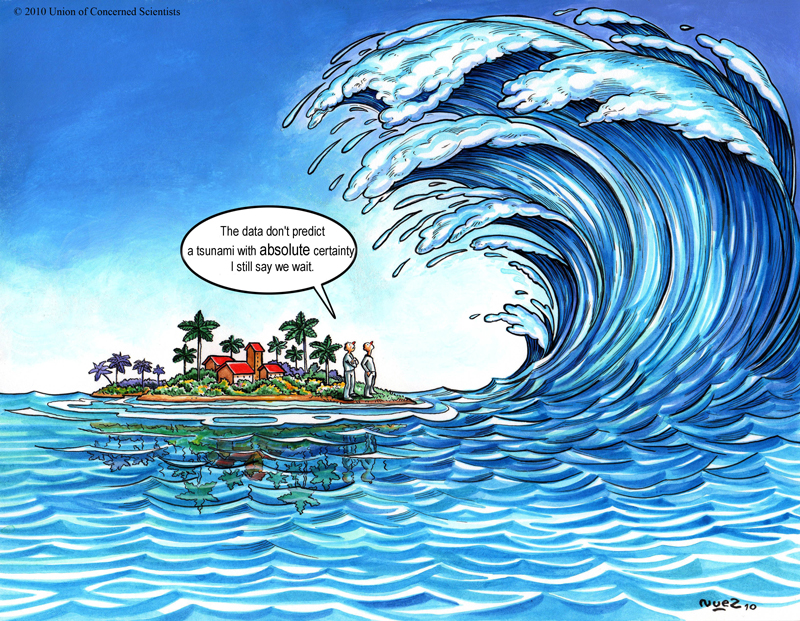
First off, there is  the no-hope kind of hope, believing nothing can change a situation. The plug has been pulled, and all that's left is to watch the water swirl down the drain. And indeed there are times when events are so large and already in play that there's little one can do. If a tsunami threatens, you run as far and as high as you can, but you aren’t going to move your house or stop the water. It’s too late for that. On a drier day, if your house catches fire, you can try to put it out, but at a certain point it’s best just to get out and watch it burn. Stay alive to rebuild another day.  If you have a terminal illness you can undergo various costly procedures that have little chance of working, or, with as much equanimity as you can muster,  you can focus on the quality of life of the time you have left. So there are situations when no hope (the acceptance phase in Kubler-Ross’s five stages of grief) is the right choice. Some might call it pessimism, some might call it realism. It can be seen as giving in to despair or just sheer logic and pragmatism. Sometimes, though, "no hope" is used as an excuse when something actually could've been done to remedy a situation. Sometimes "there's no hope" is short-hand for "I just don't want to inconvenience myself in any way."

Then there is passive hope. The belief that, in spite of everything, things will work out for the best. That somehow, without effort on our part, our problems will be solved. And indeed, sometimes the universe does seem to work in mysterious ways. One of my favorite themes running through Shakespeare in Love:

Philip Henslowe: Mr. Fennyman, allow me to explain about the theatre business. The natural condition is one of insurmountable obstacles on the road to imminent disaster.
Hugh Fennyman: So what do we do?
Philip Henslowe: Nothing. Strangely enough, it all turns out well.
Hugh Fennyman: How?
Philip Henslowe: I don't know. It's a mystery. 


A caricature of passivity, Henslowe goes with the flow even though it makes him anxious and he nearly gets his ear cut off.  And, lo and behold, his philosophy proves sound!  Things work out with very little intervention on his part.  Happy endings abound, or at least the show goes on.

 The last kind of hope is active hope. It requires action in the face of uncertainty. We hope that our children will grow up happy and healthy. We can’t guarantee it, but we take as much action towards that goal as we can, and then optimistically hope for the best. 

The universe appears to like those crazy optimists.  Studies show that while pessimists have a much more accurate view of circumstances, optimists have better outcomes in life.  This is because by believing a situation is rosier then it actually is, optimists try. They don’t give up, they don’t admit defeat before they’ve even begun. So because they try, they succeed more often than pessimists whose more realistic understanding of a situation leads them not to try at all.

But these studies only hold true for active optimists, not passive ones.

Consider this scenario:  you have a patch of ground in your yard and you would like it to produce fresh vegetables for you. A pessimist might say that there isn't enough sun, the soil is too compacted, the probability of pests too great to make a garden worth the effort. An active optimist would loosen the soil, add the compost and fertilizer, trim back some overhead branches to let in more light, plant the seeds, and see what happens. Maybe the pessimist is right, maybe the garden will not produce, but the active optimist is willing to put in the effort and take his or her chances. A passive optimist would wish a garden to just show up in the patch of ground. Who knows—a bird could drop seeds from overhead, a neighbor could just up and plant some stuff, perhaps seeds might fall from a plane. Maybe a random person passing by will feel the urge to sow something in the dirt. It could happen.

Passive hope has its literary and cultural precedents. In The Three Musketeers, Athos decides there’s no way he can come up with the money to equip himself for the next battle campaign so decides he might as well sit in his room and wait for the equipment to come to him. And, remarkably, it does, thanks to his active, generous (and it turns out, lucky) friend, d’Artagnan. And in one of my favorite Dr. Who episodes, Warrior’s Gate, as the characters search frantically for a way to avoid imminent collapse into a singularity, one of the characters advises the Doctor to do nothing. (This is largely because that character has taken matters in hand in a way the Doctor does not yet understand.) As disaster approaches the Doctor finally recognizes that sometimes doing nothing is appropriate, “if it’s the right sort of nothing.”

There is indeed a time and a place for the Zen minimalism of doing the right sort of nothing. Most of the time, however, the Doctor and Athos are lively shapers of their fate. In fact, they only refrain from action the rare times when it is wiser to let other characters do the work. Though in Shakespeare in Love it’s a mystery to Henslowe how the play inevitably does go on, we see that the other characters struggle mightily to write a great play, cast it, rehearse it, scheme, organize, deal with reversals, push and strive to make the play a success.  

As Kipling observed, 
"Gardens are not made 
by singing ‘oh how beautiful’ 
and sitting in the shade.“ 

Most of the time someone must prepare the soil, plant some seeds and tend them with a certain amount of care. Most of the time if a community doesn’t manage its sewage and sanitation effectively, it is prone to outbreaks of disease. Most of the time if you use your chimney year after year without cleaning it, it will fill with soot and catch on fire. Some things one can trust to God or the universe to take care of, but other things are such a basic matter of cause and effect that God and the universe expect us human beings to stop being stupid and lazy and take care of them ourselves.

So where is this essay leading?  In the last 150 years, with the advent of the unprecedented energy provided by fossil fuels, human population has exploded.  We’ve made clever use of this energy to feed unprecedented numbers of people and raise standards of living for some to the levels of kings and queens of yore. In doing so we’ve spewed enough carbon, methane and other gases in the atmosphere that we are on track to transform our planet into a scorching hell. Why we lack urgency about this matter is because when it comes to carbon emissions, there is a time lag between cause and effect. This summer we are feeling the effects of carbon emitted fifty years ago. Unless we quickly get into the business of absorbing carbon rather than emitting it, the carbon we spew into our atmosphere this summer will be felt by our progeny fifty years hence.

Human Population

If we don't put the brakes on our collective carbon emissions, the earth’s temperature will rise 7 degrees F (4 degrees C) within our children’s lifetimes. This will be the hottest the earth has been in 30 million years. Half of all species presently living will go extinct, arable land will dwindle drastically, starvation and/or flooding will create hundreds of millions of refugees, and hundreds of millions will die from disease and/or starvation. This rise in temperature of 7 degrees F will likely trigger further feedback loops that will raise temperatures even further:  to an 11 degree F rise within our grandchildren’s lifetimes, and to a 22 degree F rise by the year 2300.  Ultimately, this will mean billions of humans dying with the earth so hot, survivors will be driven to live underground or in scattered, isolated areas still cool enough for human existence. If this is not a human extinction event, then it will be very close to it.

The future we are now creating for our children and grandchildren is bleak. Rapid climate change will bring about devastation and destruction on a scale worse than any war, any drought, or any plague humans have ever endured. The suffering and loss of life will be far worse than anything Hitler or Stalin ever dreamed of. Climate change on this scale is not just a possibility. If temperatures rise high enough to melt the methane frozen in the ocean and the arctic permafrost, it is a certainty. And methane has already begun to bubble up from the Arctic Ocean in plumes never before seen.

We can do nothing, of course, and hope for the best. Maybe an ice age will shortly set in and the earth will cool by itself. Maybe kindly aliens will arrive from outer space and save us. Maybe someone, somewhere will come up with some technology that will fix everything just fine. Surely if things were really bad our politicians would act responsibly and lead us down a sensible path. Why inconvenience ourselves, why spend money on energy sources that don’t destabilize the atmosphere, why change our lifestyles to reduce the amount of energy we consume, why go to the trouble of figuring out how to live in balance with our planet when there is a tiny chance some other force will step in and do the work for us?

This is passive hope, often known as wishful thinking.  We are Sleeping Beauty dreaming that someday our prince will come and solve all our problems. No need to fight dragons or witches.  No unpleasantness, no effort, no responsibility. Just deep, deep unconsciousness.
On the other hand, if we have no hope, if we believe humans are too selfish, greedy and short-sighted to change, that extinction is our species’ fate, then we will do nothing as well. Indeed, I wrote a blog post about the futility of spitting in the wind. In Beaufort 1849, Jasper attempts to persuade antebellum Beaufort to avoid its terrible fate. Finally he recognizes that regardless of what he might say or do the townsfolk are dead set on hurtling themselves towards secession and oblivion. He goes from active hope to no hope, although by letting go of his hope for the South, he is able to have hope for himself. But the Civil War, although a terrible tragedy that caused a great deal of death and suffering, didn’t mean the end of life on Earth for most people or whole species. The devastation was localized, reversible, and the people who suffered largely (though certainly not entirely) held at least some responsibility for the problem. (There are arguments to be made that before the war the North profited almost as much as the South from Southern slavery; it was only because the South wanted to extend its economic system into the West that the North put its foot down.)

This is not the case now. The earth may indeed heal itself after all this, but it will take millions of years. The people who will suffer the most are ones not yet born, and the plant and animal species that will die off will hardly be responsible for their extinction. In addition, while Jasper could leave the South, as far as I know we can’t leave our planet. We have nowhere to go. Even if the odds of fixing our predicament are low, to not even try, to give up while there is still a chance of avoiding catastrophe is senseless and immoral. We have a responsibility to step up to the plate and do our best to prevent suffering rather than inflict it. To save who and what we can. This is active hope.

We have a chance now, a chance that grows slimmer each year. Time is slipping through our fingers.

If it’s hard to understand how our continued emissions of methane, CO2 and other gases has endangered the stability of our climate, watch this TEDx talk, Climate Change is Simple, below. This is not fear-mongering, Chicken-Little-the-sky-is-falling. This is Jasper telling antebellum Beaufort their entire way of life is going to end if they continue on the path they’re on.

No hope, passive hope, active hope. The first two take no effort but are unlikely to end in anything but tragedy. The third takes effort, investment, and a willingness to change, with no guarantees that the effort won't be for naught.  Which one will we choose?

(A future post will cover how to reduce one’s carbon footprint by ten percent a year for the next five years, both the money-is-no-object way and the keep-within-a-reasonable-budget way.)

Climate Change is Simple:


Thursday, November 3, 2011

The Civil War--A Rough Beast Slouches

In 1849 things were good in Beaufort, South Carolina and about to get better. Over the next decade Britain’s demand for Sea Island cotton would go through the roof with prices to suit.  From 1850 – 1860 a great many of Beaufort’s grand houses were built as the money flowed in. Though friction with the North was increasing and inflammatory talk about secession was escalating, they were adamant  that their way of life was not negotiable. What was just around the corner for the white population of Beaufort—collapse, calamity and ruin--no one saw coming.

Conundrum
The seeds for the Civil War were sown long before 1861.  Even our founding fathers knew they’d embedded a desperate conundrum into the Constitution with its express protection of both human rights and slavery in the same document.  Benjamin Franklin foresaw much when he said, "Slavery is such an atrocious debasement of human nature, that its very extirpation, if not performed with solicitous care, may sometimes open a source of serious evils."  Thomas Jefferson knew trouble lay ahead when he said about slavery, “We have the wolf by the ear and feel the danger of either holding on or letting him loose.”  Patrick Henry wrote, "I believe a time will come when an opportunity will be offered to abolish this lamentable evil. Everything we do is to improve it, if it happens in our day; if not, let us transmit to our descendants, together with our slaves, a pity for their unhappy lot and an abhorrence of slavery."

The Triumvirate at Work
Pity their descendants as they might, the problem that was too thorny for these great men to solve was left for a future generation to suffer through. Two economic systems fought for dominance—the South’s agricultural economy made possible by slave labor and the North’s industrial economy with its denser population and huge influx of immigrants.  Both wanted to expand into the western territories, the South to preserve the delicate balance of power in Congress, the North to populate the vast plains and the west with their burgeoning population. The entire first half of the 19th century was spent in compromise to prevent these two forces from tearing the country apart.  The great triumvirate of Webster, Clay and Calhoun plied their wiles in the Senate year after year to preserve the young nation. But in the end the internal contradictions of the competing ideologies and economic systems were too much. The center could not hold. As Yeats notes so often happens with war, “a blood-dimmed tide” was loosed upon the world. 

The Wages of Rhetoric
Did antebellum Beaufort have no inkling as events began to spin in an ever-widening gyre? Could they not see that the rhetoric they cheered would turn into fields of blood and mud? Perhaps no one, Northerner or Southerner, could have anticipated half a million lives would be lost. Indeed both sides expected the conflict to end in a matter of months. Perhaps Jefferson was right that  both holding on to slavery or letting go involved disaster. But could the South have transitioned away from a slave economy in a way less catastrophic and destructive? Could they have avoided the rough beast slouching towards them? This is what Beaufort 1849 explores.  

Those who believe their way of life is not negotiable may find, indeed, that history does not negotiate.
  

THE SECOND COMING (William Butler Yeats)
    Turning and turning in the widening gyre
    The falcon cannot hear the falconer;
    Things fall apart; the centre cannot hold;
    Mere anarchy is loosed upon the world,
    The blood-dimmed tide is loosed, and everywhere
    The ceremony of innocence is drowned;
    The best lack all conviction, while the worst
    Are full of passionate intensity.

    
    Surely some revelation is at hand;
    Surely the Second Coming is at hand.
    The Second Coming! Hardly are those words out
    When a vast image out of Spiritus Mundi
    Troubles my sight: a waste of desert sand;
    A shape with lion body and the head of a man,
    A gaze blank and pitiless as the sun,
    Is moving its slow thighs, while all about it
    Wind shadows of the indignant desert birds.


    The darkness drops again but now I know
    That twenty centuries of stony sleep
    Were vexed to nightmare by a rocking cradle,
    And what rough beast, its hour come round at last,
    Slouches towards Bethlehem to be born?


Thursday, September 8, 2011

Beaufort 1849 Now Available on Apple iBooks

Find Beaufort 1849 on Apple iBooks, available through the iBooks app or the iTunes Bookstore.  Available in six countries--Australia, Canada, France, Germany, United Kingdom, United States. Can be downloaded to the iPad, iPhone, or iPod Touch.

Just out of curiosity, do you use an e-reader?  Which one? (Leave a comment!) I've been using a Kindle lately, though I do still peruse regular books.

Friday, August 12, 2011

Congrats to Beaufort, South Carolina on Their New Bicycle Amenities!

I just read in the Beaufort Gazette (doesn’t everyone peruse their website daily?) that the town of Beaufort is in the process of adding sharrows to some of their busier streets. In addition, they’ve recently installed ten bike racks at various places around town. Says Mayor Billy Keyserling:

"Our goal is to make it comfortable and safe for people to move throughout Beaufort, whether they're on foot, in a car, on a bike, in a wheelchair, on a bus or riding a horse-drawn carriage. Roads need to be more than just thoroughfares for cars and trucks."

What an enlightened view.

Though the downtown and historic districts are wonderful for walking, Beaufort is even more fabulous for bicycling.  It’s flat, and, except for a few roads, the traffic is calm and leisurely.  (The horse-drawn carriages certainly help with this.  You want to calm your town’s traffic?  Sprinkle a few carriages here and there and traffic drops to a nineteenth century pace before you can say Edgar Allan Poe.)

I can’t say I’m a big fan of sharrows, painted arrows on the road indicating that the lane is meant to be shared between cars and bicycles. On any road with a speed limit above 25mph, bike lanes are much better.  That way bikes have their space, cars have theirs, and far less conflict is to be had by all.  But at least sharrows remind drivers that bicycles may be present, and in that respect they are better than nothing.


Here in San Francisco I’ve been a hardy urban bicyclist for the last three years.  I bike or walk half my trips, including grocery shopping.  I’d do even more if I weren’t constantly shuttling teens around in carpools.  But bicycling in San Francisco, while enjoyable and rewarding, is rarely a tranquil experience.  Beaufort, on other hand, as one glides under moss hanging from oaks in the sleepy afternoon heat, offers a timeless, limpid serenity. Lovely.  Though I have to admit I’d rather experience this serenity this in temperatures under 90 degrees than over.

Charleston is another great bicycling town with its own brand of bicycle chic, and Hilton Head offers some of the best physically-separated bicycle infrastructure in the country.  They deserve their silver medal as one of the nation’s top bicycle-friendly communities!

Bicycles are one of the most efficient machines human ingenuity has ever devised.  If it weren’t for the fact that they didn’t appear in America until after the Civil War  (although reports of something called a velocipede popped up in Scotland as early as 1839) and also for the fact that Beaufort’s antebellum roads consisted mostly of sand lined with oyster shells--not the best bicycling surface before rubber tires came on the scene, although very pleasant for horses, I imagine--I might have tried to slip one into Beaufort 1849.  Instead, the characters ride on horseback or in carriages, or, when they’re in need of a constitutional, they walk.  As proper antebellum characters should. Ah well.  I can bicycle in Beaufort now.

Sunday, July 10, 2011

Publishers Weekly Review of Beaufort 1849

Beaufort 1849
Karen Lynn Allen
Cabbages and Kings Press (www.cabbage-king.com), $13.95 trade paper (306p) ISBN 978-0-9671784-1-7

In this lively historical novel, set in Beaufort, S.C., at the apex of the town's antebellum period, prodigal son Jasper Wainwright returns to his family plantation after 12 years abroad to educate his kin about the evils of slavery. When he left Beaufort for Harvard University and world travel, Jasper was known as a hellion, savage drinker, and frequent duelist. Returning now—with an education and in the company of emancipated slave Spit Jim—to visit his cousin, Henry, at the lovely Villa D'Este, Jasper is stunned that Henry's niece, Cara Randall, is no longer the child he remembers, but a poised, intelligent, self-taught young woman keen to expand her mind and horizons. Having rejected numerous local suitors, Cara has no intention of marrying, and Jasper—widowed after a disastrous marriage—vows never to make the same mistake again. But both will be proven wrong, if the matchmaking Henry has his way. Cara is a singular, independent female in a culture of aristocratic entitlement, and she and Jasper aim to change the town's brutal system of slavery and bigotry in their own, converging ways. Charged with subtle period detail and boasting fully developed characters, Allen's work is sharp, smart, and well focused.

(Note: Beaufort 1849 can be found online at Barnes and Noble, Amazon, Apple iBooks, or it can be ordered from any bookstore)

Link to Publisher's Weekly Review of Beaufort 1849  

Thursday, July 7, 2011

Spitting in the Wind, Past and Present


To spit in the wind is to attempt the impossible, a waste of one’s time and energy, even if for a good reason or cause. In Beaufort 1849, Spit Jim accuses Jasper of this when, after reading an enlightened letter to the editor in the Charleston Courier, Jasper perceives a faint chance that the South might voluntarily transition away from a slave economy. Jim, justifiably antsy to leave the South, doesn’t believe it for a second. “No one gives away wealth and power just because someone writes something sensible in a newspaper once in a while,” he tells Jasper caustically and urges him to leave both the South and this futile hope behind as soon as possible.

But Jasper sees the tragedy that lies ahead if the South doubles down to defend its way of life. At the dawn of what is now known as the Second Industrial Revolution, he’s aware that not only is public sentiment in the North and in Europe growing against slavery, but that the wealth and power of the world is beginning to swing heavily towards mechanization, industrialization, and energy supplied by coal. Try as it might, there will be no way for an agricultural South to maintain its economic and political parity with an industrialized North. Flush with immigrants and a growing middle class, the North is already vying for its economic system to prevail in the new territories and states as the nation expands. Further, as cries for secession mount in Beaufort, Jasper foresees the sheer impossibility of the North letting the South become a separate, hostile, militarily-powerful country stretching along its entire southern border, competing to annex land and resources. Because the South will be on the wrong side of economic (not to mention moral) history, Jasper realizes that in the coming fight for dominance the South is likely not only to lose the battle but to have its entire civilization crushed in the process.

Jim, born and raised a slave, is just fine with the prospect of the South’s destruction. Jasper, however, argues that given the suffering that will likely result, they should try to head off the brewing violence by advocating for reform. And so he begins his impossible task of convincing Southern planters to voluntarily give up a portion of their wealth and control, turn slaves into citizens and willing participants in the economy, begin mechanized farming, and industrialize by creating mills to manufacture cotton into cloth for local markets. (The South will eventually do some approximation of all of this, but not until enduring great suffering, death and hardship, and even then the collapse of the Southern economy and widespread poverty will endure several generations.)

I don’t think it’s giving too much away to say that Jasper does not succeed in preventing the Civil War. Was he a fool even to try? Indeed, what are the odds that any one man could change the mind of an entire civilization? The reader of Beaufort 1849 knows Jasper is spitting in the wind from his very first attempt.

But if Jasper foresees disaster for the people he loves, isn’t he morally obliged to do what he can to avert it? How hard should he persevere, how much should he sacrifice?

Imagine if you were to visit a beloved cousin you hadn’t seen for a number of years. When you arrive, though he and his family appear quite prosperous, it soon becomes evident that the family is living beyond their means and that their prosperity is fueled by debt—credit cards, home equity withdrawls, no interest balloon payment loans, etc. As you hear about their recent Caribbean cruise, admire their remodeled kitchen, see the four new cars parked in the driveway, your feeling of impending doom for these people you love grows heavier and heavier. What do you do? Perhaps have a quiet talk with your cousin. And what will be the outcome? Most likely denial and perhaps a testy, “Mind your own business, everything’s under control.”

And what if your cousin lives in an entire town of people relying on ever-growing amounts of debt to maintain their lifestyle? What would your obligation be to change their behavior that is bound to make them poor, angry, unhappy and even desperate in the long run? If we like arguments, perhaps we might get into a few heated ones at a BBQ and make ourselves none too popular. For a subtler approach, we might offer hints that fall upon deaf ears. Perhaps we will be told that this way of life poses no problem, and how can we argue because, after all, it’s worked up until now? Perhaps we are indeed Cassandra’s, doomsters who want to frighten everyone into being miserable and giving up the good life because we can’t stand to see others enjoying themselves.

Upton Sinclair once wrote, "It is difficult to get a man to understand something when his salary depends upon his not understanding it."

Now what if your cousin made his living strip mining coal or marketing cigarettes? What if your cousin lived in early Nazi Germany and didn’t seem troubled by the murders and disappearances because his mercantile trade was finally booming again? What if your cousin imported goods from Asia made by children and young teens for wages that barely kept them fed? Or what if your cousin lived in a slave economy, all his friends and neighbors owned slaves, and he used slaves to farm his fields?

I first saw the phrase, “Denial is not a river in Egypt,” on a button worn by a NA (Narcotics Anonymous) member out with a bunch of compatriots on a day trip to Angel Island in the San Francisco Bay. The support and camaraderie that this group (who had likely been through hell) were giving each other was important, but so was the acknowledgement that change only occurs when one is willing and open to it. After one has identified and admitted the problem. People who don’t believe they have a problem are unlikely to change. And people whose wealth and ease depend on a particular way of life are likely to defend that way of life rather than perceive problems with it. In fact, they are most likely to perceive problems with the person criticizing it.

Now, what if the town living an unsustainable way of life (along whichever measure you wish—economic, moral, environmental, resource consumption, etc.) is not your cousin’s but your own? What if it is not your town that is on a dangerous path, but your entire country? Your planet? Jasper has the option of leaving the South, and due to his struggles with alcoholism and commitments he’s made to Jim, he knows he can’t linger in Beaufort for long. In contrast, though most of us could probably change towns, countries would be difficult, and the planet impossible. Is pressing for change then more imperative even if deaf ears and anger seem to be the only result? Or is it wiser to hunker down, accept that the worst may indeed come, and put our energies towards preparing our families and those we love as best we can? As Dmitry Orlov observes, “Big changes happen slowly at first, then all at once.” There may be less time to prepare than we think.

But what if “the worst” means the suffering and death of millions if not billions through drought and famine? What if “the worst” means our children will have available only a fraction of the energy and natural resources we currently enjoy? What if “the worst” means that half of all species currently on the planet will be driven to extinction? How bad does the future have to be to make inaction unbearable? Or is it all too clear that any attempt is simply spitting in the wind. A waste of time and energy. Pointless.

I don’t have an answer to this quandary. Anyone who understands compound interest, can interpret charts and graphs, and has a basic understanding of science will have to weigh their ethical obligations against the practical realities of their lives. I have no doubt that each of us will feel called to different actions depending on our temperaments and life situations.

All stories involve problems. In comedies, through courage, ingenuity, cooperation, dramatic epiphany or perhaps plain luck, people manage to overcome their predicaments. In tragedies, they fail. The antebellum South was a tragedy. Rather than adapt to the demands of the time, the white populace risked everything to preserve an unsustainable way of life. The result was economic ruin and the collapse of their civilization.

Which are we living right now, comedy or tragedy? Do we need pluck, gumption and courage to heroically prevail against impossible odds? Or should we cultivate our ability to accept and adapt to the inescapable forces that history is already winding up to throw at us, however dreadful and harrowing they may be?  I just don’t know.

(A note on the first cartoon above: when occupying New Orleans in April of 1862, Major General Benjamin F. Butler issued a proclamation indicating that any woman who harassed a northern soldier by any show of contempt would be arrested as a prostitute. This didn’t make him very popular in New Orleans, but it did cut down on the spitting.)

Wednesday, June 1, 2011

Head in the Beaufort Clouds

Carolina sky
It rained in San Francisco yesterday on the last day of May.  It rained again today. If you lived in San Francisco you would know that it never rains here this time of year. Nor in May do we get billowing, puffy clouds with dark undersides that roll northeast as if looking for trouble in the Sierras. Even though the sun sometimes shines through the downpour, one begins to despair of summer at all.  And so on these obstinately cool, winter-like days when my strawberries are unlikely to ripen and bike rides are sodden excursions, my thoughts turn to South Carolina--Beaufort, to be specific--where it did not rain yesterday and the temperature reached 97 degrees. Now there’s summer for you, even if the solstice has yet to arrive.

A view to what was
There was a time, a stretch of two years, when my thoughts often turned to Beaufort.  I thought of Beaufort while sitting at my kitchen table, while doing the Tai Chi form, while driving across San Francisco to pick my daughter up from school.  I remembered how the light filtered through the Spanish moss, how the river ebbed and flowed with the tide, how the cord grass swayed in the wind. I ruminated over the masses of oysters growing on the city’s piers, the daytime’s suffocating heat, the evening’s lively breeze. When I shut my eyes I saw the stately houses, the ancient arching trees. My thoughts were not so much of Beaufort as it exists, but of Beaufort as it was, though the present Beaufort was my signpost to the former age.

The way lamps used to be lit
The way to get around
Though I could visit Beaufort (and I did) I couldn’t visit 1849, at least not in person.  I read books and books, both factual accounts and narratives from the period, in my quest to digest the values and the language, the customs and the manners, the technologies, cuisine, and cultural reference points of the era. Armed with legions of details, I then had to think through my characters, how they moved through this world over a century and a half ago, parsing what would have been important to them and why. In 1849 women still wore petticoats because hoop skirts had yet to come into fashion. This made their clothing heavier and hotter than a decade later. In 1849, whale oil was still used to fuel lamps rather  than kerosene. In fact, the world had just about reached peak whales and peak whale oil, although no one then yet knew it. In 1849 laundry was a heavy, hot affair and no one with money did their own. In addition, since dyes were not colorfast, most top layers of clothing were brushed, not washed, preferably by a servant. In 1849 roads in the South were poor and trains not yet prevalent, so for a town like Beaufort, being on a steamer route connoted a nearly cosmopolitan connection to the exterior world.

Crushed
In 1849, most Americans (Thoreau one of the few excepted) felt pride in the crushing of Santa Anna and the Mexican army and saw nothing amiss in forcing Mexico to sell of a third of its land at a cut-rate price to its stronger neighbor. In 1849, gold was practically leaping into the hands of miners in California, Chopin was writing his last waltzes in Europe, and the engines of the industrial North were revving up, even if the South couldn’t hear their echoes yet. In 1849, the last good president had been Andrew Jackson a dozen years before, John Calhoun (South Carolina’s “cast iron” senator) was on his last legs, and manifest destiny was no longer a doctrine but an achievement in progress. In 1849, things were changing in America with more speed and uncertainty than the average citizen was comfortable with. Though the last five sentences are all gross generalizations, it gives broad brushstrokes of the American 1849 mindset. But what their memories would have consisted of—that was harder to reconstruct.

Granddaddies
What I gleaned from my reading was that historical cultural memory of the era proudly focused on the glorious revolution that their grandfathers had achieved and the momentous first-of-its-kind government they’d subsequently created. In 1849 these grandchildren knew they had inherited something grand but were growing uneasy as to whether it was a legacy they could keep.  The Bible, the Magna Carta, ancient Rome, and ancient Greece were their touchstones. George Washington and Mr. Jefferson had been known (or at least seen) by men and women still alive.  In 1849, most people were aware that life was less dangerous, brutal and short than it had been for their forefathers, and they were grateful. The Civil War and its awful grinding slaughter did not lurk unpleasantly in their past.  At that point the pain involved in rending the nation in two was not something they could conceive of. Though certainly adept enough at hangings, whippings and other brutality, they were also incapable of imagining the systematized factory barbarity that the twentieth century achieved at Auschwitz that still haunts our collective memory today. We can envy their innocence, but events that should have featured prominently in their historic conscience—the Trail of Tears, the horrific sea passage of the slave trade—most seemed to dispose of with a shrug.

No looking back
1849 in America was not a time of regret for past failings or longing for what was. That would come later, at least for the South. Instead it was a time of expansion and optimism, of growth and domination. For those growing cotton, it was a time of great wealth. For centuries now America, priding itself on its optimism and expansion--geographically, economically, and otherwise--has been little interested in all but the most superficial glances backwards. Perhaps those who are confident of the future always have little patience for history. Perhaps like a shark we must always swim forward or perish.

Salty pillar gets a good look
Perhaps only those who are uncertain about what lies ahead try to see what the past can tell us. Like Lot’s wife, they are the ones who, with wavering step, turn back to glimpse the fire and brimstone. For this momentary act of defiance, Lot’s wife (she never even gets her own name) is transformed into a pillar of salt. But the Bible gives us the story of Lot and his doomed cities precisely to encourage us to look back, to reflect, to learn. Sometimes looking back, even to the summer of 1849, is a means of swimming forward.

Thursday, April 28, 2011

The Civil War is Apparently Not Over

When I first began to research my book, Beaufort 1849, I was under the naïve impression that the Civil War ended in April of 1865, when Lee surrendered at Appomattox. Boy, was I a Civil War noob! 

Persistence of memory?
With so much water under the bridge, I blithely assumed there was a general consensus on the war’s W’s and H--where it was fought, when it was fought, how it was fought, who fought it and why. As I read and read, I came to understand that none of these questions have a definitive answer yet, not among scholars and not among average Joes. Indeed, from slavery to states’ rights, the question of why the war was fought is still contentious enough to provoke tantrums, if not actual fistfights. (In contrast, when’s the last time a Brit brawled with an American over the Troubles in the Colonies?)

Still in the fight
Which leads one to wonder whether the Civil War actually ended at all. An alien visiting our planet (not knowing our penchant for re-enactments) after witnessing battles between men in blue and grey uniforms with their cannons and explosions of gun powder and then reading heated and vituperative rhetoric on internet blogs might be forgiven for concluding that the Civil War has stretched centuries. The war’s significance and origination are still debated endlessly, from the depths of doctoral theses to the scratchy static of call-in talk radio. On discussion boards, William Tecumseh Sherman is characterized anywhere from avenging angel to Genghis Khan and Hitler rolled into one. Further evidence of passions flying high is that one particular symbol of the war, the Confederate flag, is still so inflammatory and carries such heightened meaning that rational discourse about it is just not possible.

Like it was yesterday.
 In general, Americans tend to have amnesia about their own history. (Spanish-American War—what’s that?  A foreign army once burned the White House to the ground? Not a chance.) But when it comes to the Civil War, memories are fresh. Even the names we have for the conflict reflect on-going contention: “War Between the States,” “War of Rebellion,” “War of Northern Aggression,” “War of Southern Independence.” That trauma creates scar tissue is to be expected, but when people are still arguing over flags, definitions, and names a hundred and fifty years later, something is clearly unfinished. Reflection and analysis are always valuable; choler and bitterness reflect a festering wound still unhealed.

No, this war isn’t over, and the cannons, even after a century and a half, are not yet silent. Not by a long shot. Happy sesquicentennial, America.

Wednesday, April 13, 2011

Nose Tweaking, the Ultimate Insult

Tempted to tweak?

Though difficult to imagine today, there was a time when grabbing someone’s nose and giving it a twist was an insult so egregious it was likely to end in one of the parties’ death. For centuries in both America and Europe, violation of a man’s honor demanded retribution by duel, and though by the middle of the 19th century duels were theoretically illegal in all states, they were prevalent among the elite class in the South up until the Civil War.

Evidently the nose was a particularly sensitive spot for insult, probably because in those more modest times it was the part of the man always public and exposed and tended to be associated with a man’s assertion, will and confidence. Present day psychologically-inclined historians even speculate that the nose was a stand-in for—how should we put this delicately?—another item of protuberant male anatomy synonymous with masculinity. So to insult the nose was to insult the man deeply to the core.

As we see in Beaufort 1849 nose tweaking is how Johnny finally goads Jasper into a duel: 
 “No,” Johnny said, shaking off his host and turning back Jasper. “You’ll fight me, Wainwright, or you’re a coward.” There was a collective intake of air at this, followed by several gasps as Johnny accentuated his defaming words by reaching out his hand to tweak his adversary’s nose. Johnny might have succeeded if Jasper hadn’t grabbed him hard by the wrist, or perhaps he did succeed for the briefest of instants, it was impossible for anyone besides the two involved to know for sure. But now the course was set. The insult was too grave to be ignored by even the most lenient of standards, and the standards for gentlemen in Beaufort, South Carolina were not lenient.

A personage no less than President Andrew Jackson possibly suffered the dishonor of a nose tweak—while he was president! (Where was the Secret Service?)  Five years after Jackson had removed naval officer Lt Robert Randolph from military service, the disgraced man approached Jackson, made as if to shake his hand, and then reached out to the jutting appendage instead.  (As we know from our twenty dollar bills, Jackson had a good-sized one.) In response, Jackson tried to beat Randolph with his cane but was prevented by the other men in the room. A friend immediately offered to go kill Randolph, but Jackson refused because one’s honor could only be defended by oneself. Afterwards Jackson denied that Randolph or anyone else had ever successfully tweaked his nose, thus his honor had not been compromised. Jackson was no stranger to duels--in the course of his life, he fought in thirteen and had been wounded so frequently (with the bullets often not removable) it was said that he “rattled like a bag of marbles.”

I wonder which customs we feel strongly about today will cause people 150 years from now to scratch their heads and say, “You’ve got to be kidding!”

Sunday, April 10, 2011

Robert Smalls, the Sequel

From The Improbable Story of Robert Smalls, you may recall that after Smalls piloted his way to freedom during the Civil War, he received $1500 as his share of the prize money for the captured boat, Planter. As related in Beaufort 1849, the town of Beaufort, South Carolina was one of the first taken by the Union forces, and the mansions of Beaufort were turned into Army headquarters, barracks and hospitals, preserving them from destruction later in Sherman’s fiery path.

After the war, the U.S. government imposed taxes on all property in Beaufort, starting from the date of occupation. (They didn’t, ahem, offer to pay the owners of the houses rent for the use of their buildings during the same period.) This forced most antebellum residents of Beaufort to lose their homes because either they couldn’t pay the taxes or had yet to return to Beaufort and had no knowledge that the taxes were in arrears. Grand mansions were auctioned by the government off at a fraction of their original cost to build.

Robert Smalls, however, benefited.  With the proceeds of his prize money he purchased his former master’s house on Prince Street in Beaufort. He also started a business, opening up a shop for freedmen (former slaves). He joined the Republican Party and was elected to the South Carolina House of Representatives, the South Carolina State Senate, and five times to the U.S. Congress. He participated in the writing of the new South Carolina state constitution and was largely considered the most powerful black man in the state for five decades.

The Reconstruction era was one of the more ignoble in our country’s history.  At first Southern white men were widely disenfranchised politically and economically. Then the tide turned and African-American men were disenfranchised even more virulently of many of their newly-won rights. (Women of both races would have to wait quite a while for their enfranchisement.) Though some positive things happened for freedmen, corruption was rampant.  As the Reconstruction era wound down and Southern whites did their best to reduce African-American political power in order to regain their own (while the North turned a blind eye), Smalls was accused and convicted of bribery. He was subsequently pardoned as part of a deal that also dropped charges against Democrats who had been accused of election fraud. (I smell a set-up from the very beginning?) He spent the rest of his days in Beaufort as a shop owner and customs official.

My favorite part of Smalls’ story is not his Civil War heroics nor his legislative record, but rather this anecdote. In 1875, long after the war, his former mistress--old, widowed, ill, and dreadfully impoverished--showed up at the house on Prince Street, perhaps believing it was still hers. Instead of turning her away, Smalls not only let her in, he ensconced her in her old bedroom and took care of her until her death in 1904, including personally serving her meals. Of all Smalls’ notable achievements it is this compassion and kindness that I find most astonishing.

In Smalls' life we find war, politics, heroism, public service and scandal in a story that limns the tumult of our nation's struggle. We see a spectacular rise, an ignominious fall, and a humanity that shines across the centuries. Robert Smalls, Beaufort hero.

Saturday, April 9, 2011

The Night Before the Duel (excerpt)

As the party guests were loaded on the boat, Jasper retired to his room to find Jim with a whale-oil lamp lit and a magazine on the table in front of him. “I hear you’ve landed yourself in some trouble,” Jim said, barely glancing up when Jasper entered.
Jasper shook his head. “I hate the South. I really, really hate it.”
Jim shrugged. “Then let’s leave. Tonight.”
“If I did,” Jasper said, “it would disgrace Henry until the end of his days.”
“As near as I can tell, he’s not the one doing the dying,” Jim pointed out. He eyed Jasper critically. “You know, you left the South but it didn’t leave you. If your white man’s honor is more important to you than your life, so be it. But don’t pretend you’re doing it for Henry. You’re doing it for yourself.”
Jasper sat down heavily in a chair. Of course Jim was right. After Johnny’s challenge, it was his own honor at stake, his own social acceptance in Beaufort, as marginal as it was, that now hung by a thread. The honor of a gentleman might be just a matter of custom and values but it was as real as a set of manacles. He either had to leave tonight with his tail between his legs or fight tomorrow. And he just wasn’t ready to leave.
“Will you come to the duel?” Jasper asked at last. “Put me back together if any pieces fly off?”
Jim nodded with resignation. “So long as he doesn’t get you in the heart or the head, I can probably patch you up. Funny how you managed to avoid French husbands calling you out when you deserved it, and now, when you don’t deserve it, you wind up with this. I told you that petticoat would cause you trouble. Admit it, I was right.”
Jasper had to smile. “You’re always right, damn you.”
“And I’m also right about you wasting your time trying to change something that’ll never change.”
Jasper considered the assertion. “When you weigh it against all the potential suffering, it’s got to be worth a try.” Jim shook his head as he stood up. “You really have to go?” Jasper said.
“You need me to hold your hand?” Jim asked.
“If I only have seven hours left to live, I could use some company.”
Jim snorted. “Now that I’ve seen the world, I can truly say what I’ve always believed: southern white men are the biggest idiots on earth. I don’t know why we worry about freeing the slaves. A few more years of you all shooting holes in each other, and there won’t be any of you left to be masters.”
“Have a nice ring shout,” Jasper said sourly to Jim’s back as he left. Of course Jim was right: he was an idiot to be caught up in what was essentially a lover’s quarrel. Though he might recognize in Cara an unusual sensibility being squashed by the South’s parochial culture, being maimed or killed by her rejected lover was hardly doing her a service. Yes, the whole farce was absurd. Unfortunately, there was no way out except through.
Glancing at the table, Jasper picked up Jim’s reading material and idly examined it. It was the maiden volume of a magazine called Æsthetic Papers, and the essay it was opened to was titled, “Resistance to Civil Government,” by some New England transcendentalist named Thoreau. Wondering where Jim had gotten it, Jasper pulled his reading glasses out of his waistcoat and sat down to read about the moral imperative not to cooperate with an immoral government.

Monday, April 4, 2011

Charming Cemetery--an Oxymoron?

"Charming cemetery" may indeed be an oxymoron, but in my mind the cemetery in the churchyard of St. Helena's in Beaufort is downright winsome. It's why I set two important scenes of Beaufort 1849 there--the place exudes gravitas and history. I don't even mind walking by this graveyard in the moonlight, which I did several times my last trip. Any ghosts I saw were all the friendly kind. At St. Helena's the dead are part of the community, their jumbled, worn headstones still in conversation each week with the living.

(photo by Melinda Adams)